
Trump Government Imprisons Over 6,000 Migrant Children
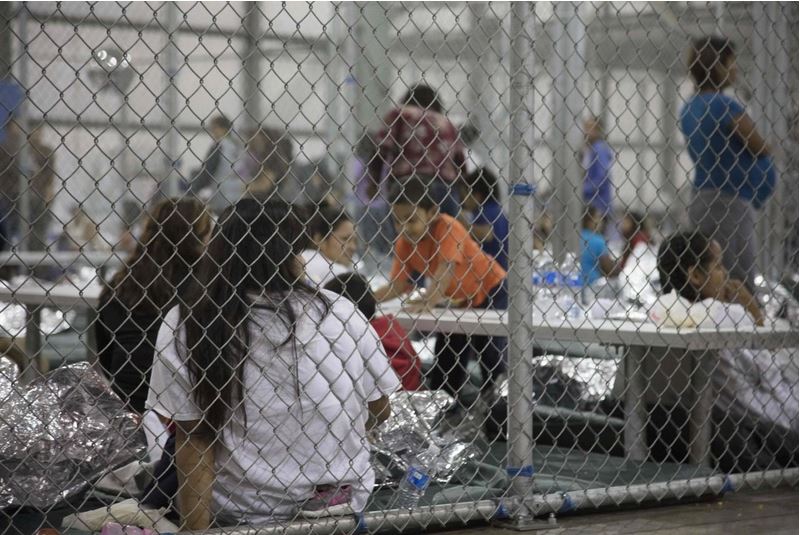
Una reconocida agencia de investigaciones de Washington señala que en Estados Unidos no hay una manera sistemática para proteger a los hijos de los arrestados por el ICE, ni una entidad responsable de su bienestar. En la imagen, menores en el Centro de Detenciones de McAllen, Texas, durante el operativo Cero tolerancia, en 2018. Foto: Afp
As part of President Donald Trump's offensive against immigrants, his administration has jailed more than 6,000 children in detention centers. More than 205,000 minors have suffered the detention of at least one parent — sometimes both — and years later, more than 1,000 children still have not been reunified with their families after being separated during the current president's first term. All of this is happening in the only country in the world that has not yet ratified the United Nations Convention on the Rights of Children, adopted in 1989.
Despite warnings from pediatricians and psychologists about the long-term trauma minors suffer when imprisoned — witnessing their parents handcuffed and sometimes beaten by Immigration and Customs Enforcement (ICE) agents, or being separated from their families — the Trump administration continues to use these measures against children deliberately as a weapon to curb migration flows and impose a climate of terror among undocumented immigrant communities. More than 6,200 minors have been detained and imprisoned by the federal government since the start of the Republican's second term, according to a Marshall Project analysis released in April. On average, 226 children are incarcerated on any given day — ten times more than the average at the end of Joe Biden's presidency.
"No innocent child should ever be imprisoned. The Trump administration's cruel mass deportation campaign is shattering childhoods and inflicting trauma that these minors will carry for the rest of their lives," denounced federal Representative Joaquín Castro, one of several legislators who have attempted to visit detention centers — including the one in Dilley, Texas, which for some time was the preferred facility for sending families with detained children from around the country — to examine conditions.
Under the law, established by a legal agreement known as the 1997 Flores Settlement, minors cannot remain incarcerated for more than 20 days and also have rights to basic welfare conditions. But researchers allege those rules have been consistently violated. Not only are there hundreds of formal complaints regarding severe unsanitary conditions — including food with worms or contamination, lack of medical care, and no access to toys or pencils — but according to the Marshall Project, more than 1,600 children have been jailed for over 20 days, some for months.
Federal authorities justify these practices by claiming that families choose to be incarcerated with their children because they can opt for "self-deportation" rather than remain in a detention center. Stephen Miller, White House adviser and architect of these measures, has defended all policies against "illegal" immigrants by asserting that if they love their families so much, the best option is to leave the United States and return to their home countries. In fact, experts say that is precisely the goal. "This is a strategic, coordinated effort specifically targeting children, with the goal of making life so intolerable for immigrant families that they feel they have no choice but to leave," Kika Matos, president of the National Immigration Law Center, told The New Yorker.
A new report from the Brookings Institution estimates that more than 205,000 children — three-quarters of them (145,000) U.S. citizens — have had at least one parent detained since the start of the Trump administration. The Brookings report, from one of Washington's most prestigious research and analysis centers, also estimates that more than 53,000 of these children with at least one parent detained are under six years old. The report states that "there is no systematic way to protect the children of those detained by ICE" and that "there is no entity responsible for the well-being" of these minors. In fact, it is not truly known what happens to them after one or sometimes both parents are detained.
During Trump's first presidential term, his administration, under a border migration control policy called "Zero Tolerance," forcibly separated more than 5,500 children from their parents and families — some of them infants — and did not implement a tracking or monitoring system to allow for later reunification. After protests, public condemnation, and adverse court rulings, the Republican rescinded that measure and agreed to facilitate a family reunification process, but it remains unclear whether that has been achieved. Human Rights Watch released a report in late 2024 detailing that approximately 1,360 of those separated children had not been reunited with their parents.
The American Academy of Pediatrics, the American Medical Association, psychiatric organizations, and other child and youth health specialists have called since 2025 for an end to family detention practices. In a letter sent to the president and the Department of Homeland Security, they asserted that no immigrant child should be imprisoned. "There is no evidence that any time in detention is safe for children, and arrest itself presents a threat to their health. In fact, even brief periods of detention can cause psychological trauma and long-term mental health risks," they warned. The group Physicians for Human Rights released a report in 2020 concluding that the trauma suffered by children and adults under the child separation measure constitutes "torture."
Doctors, psychiatrists, and thousands of other health professionals have repeatedly called for the release of every child in detention, following the recommendation of the American Academy of Pediatrics. Opposition politicians continue to denounce these practices. Stories repeatedly emerge about detained children expressing that their only wish was to return to school with their friends, insisting they did not understand why they were suddenly in an arrest center. A seven-year-old girl held at the Dilley facility asked her mother, an Ecuadorean immigrant: "Mom, what crime did I commit to be a prisoner?" The woman told the Associated Press in an interview that "she didn't know what to answer."
The Trump administration's open contempt for the United Nations makes it unlikely that the United States will ratify the Convention on the Rights of the Child, thus remaining the only member state not party to this international legislation. The Convention establishes "that States Parties shall ensure that all children — without discrimination of any kind — benefit from special protection and assistance measures; have access to education and health care; can fully develop their personalities, abilities, and talents; grow up in an environment of happiness, love, and understanding; and receive information on how to realize their rights and participate in the process in an accessible and active manner." Given this, the absence of condemnation from the 196 signatory countries to the convention, as well as from the governments of the countries of origin of families with children jailed in the United States, is notable.
Add new comment