
Supreme Court Begins New Term With Eyes on President Trump
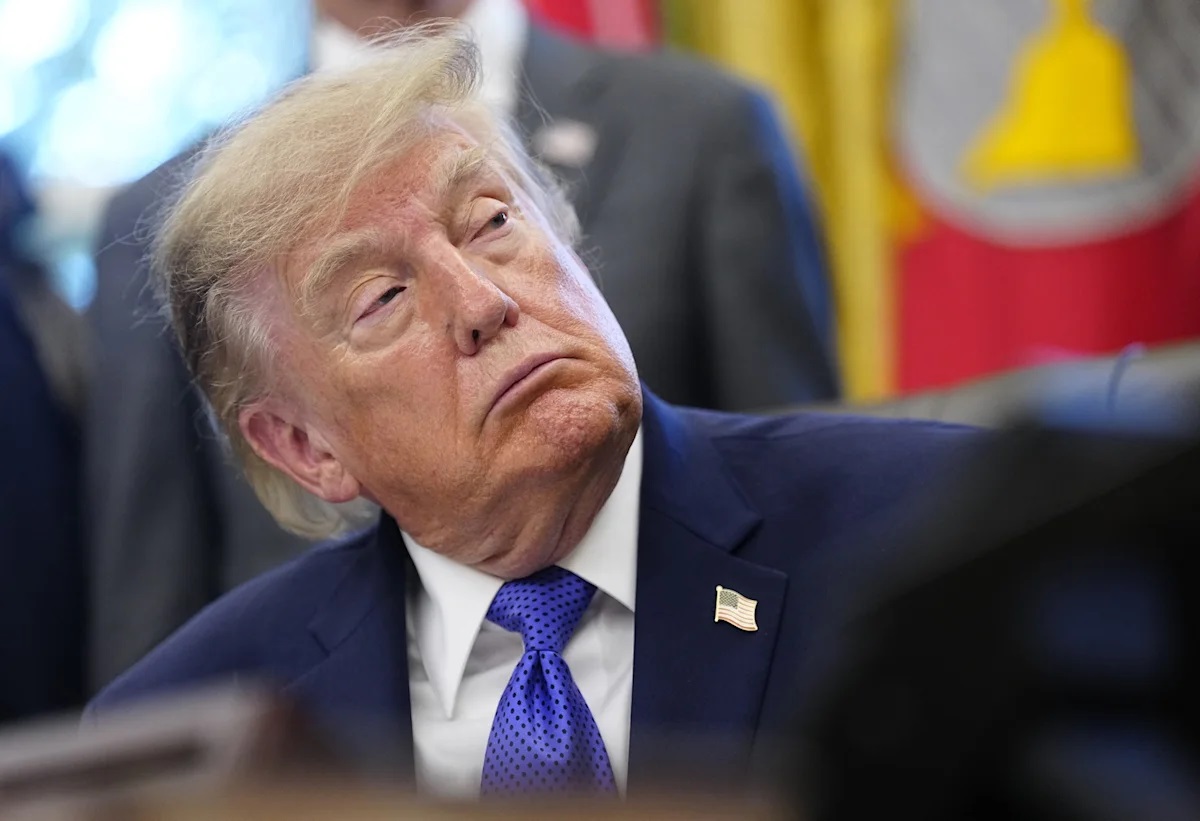
Imagen tomada de https://www.efe.com
WASHINGTON — When the U.S. Supreme Court opens a new nine-month term on Monday, there will be a notable absence of a key figure: President Donald Trump.
After months of near-constant clashes with the White House, the nine justices will return to their seats behind the tribunal's mahogany bench without a packed docket of high-profile separation-of-powers cases driven by Trump that defined the previous term—ranging from tariffs and birthright citizenship to the firing of previously independent government officials.
However, that breathing room is unlikely to last long.
In the coming weeks, the justices will decide whether to intervene in Trump's contentious defamation dispute with magazine columnist E. Jean Carroll, the massive cancellation of federal research grants, whether the Department of Government Efficiency must provide records detailing the downsizing of federal agencies last year, and the administration's ban on transgender Americans serving in the military.
Those and other cases could join a term that already includes a major Second Amendment challenge against AR-15 rifle bans, the most consequential climate change case to reach the justices in nearly two decades, and a dispute over whether taxpayer-funded religious preschools can refuse to enroll children of same-sex couples.
So far, the court has accepted 28 cases for the upcoming term—less than half of what the justices will likely decide before June.
“There’s a very high probability that the 35 or so cases the court is likely to take over the rest of the year will be the ones that really steal the spotlight,” said Masha Hansford, an attorney at Davis Polk & Wardwell and former assistant to the solicitor general, during a recent event hosted by the National Constitution Center.
One area where the court is already examining Trump's policies this term is immigration. The court announced in recent days that it will hear arguments on the president's mandatory detention policy and his initiative to deport migrants to countries other than their own. Although significant, neither of those cases has drawn the same level of attention as last year's birthright citizenship case.
The dance with Trump
After Trump and his allies launched a rhetorical war against lower courts in early 2025, the president and the Supreme Court appeared to reach a delicate truce by midyear: a high-wire act in which Trump has abided by the defeats imposed on him by the high court, even as he occasionally lashes out at the judges who backed them.
The court ruled overwhelmingly in favor of Trump's emergency agenda—the fast-tracked cases usually resolved without hearing oral arguments. It also backed the president in major merits cases debated during the previous term that yielded full opinions. One was the landmark decision allowing him to fire heads of independent agencies like the Federal Trade Commission. But the court was also willing to set boundaries for Trump in some of those cases, such as rejecting his emergency global tariffs and his push to revoke birthright citizenship as it had been understood for over a century.
Nevertheless, Trump did not refrain this summer from attacking the 6-3 conservative-majority court, including the three justices—Neil Gorsuch, Brett Kavanaugh, and Amy Coney Barrett—whom he appointed during his first term. Trump told Time magazine last week that he regretted appointing them.
“I gave them the job of their lives,” the president lamented, “and they often vote against me.”
The justices themselves have largely avoided speaking out when asked about Trump's unusually personal attacks against the court. Justice Samuel Alito, a conservative speaking with CBS as he prepares to publish a new book this week, said there has been a “huge change in what presidents say about the court when they're unhappy with our decisions.”
However, Alito noted that those “very harsh” criticisms have been “bipartisan.”
Pressed on Trump's sharpest statements, Alito remarked: “He has his own way of phrasing things.”
Gearing up for an election
Before the court decides any of the ordinary—or merits—cases it has accepted, there is a possibility it will have to deal with an avalanche of litigation related to next month's midterm elections. Whether that turns into a flood or a trickle could rest in the hands of voters.
Derek Muller, a law professor and election law expert at Notre Dame, said he considers the likelihood of post-election litigation to be low “because there probably won't be enough decisively close races where litigation would actually make a difference.” But, he added, “if it happens, it could significantly transform the Supreme Court's upcoming term.”
The court has already handled a series of redistricting disputes stemming from the president's mid-decade push to redraw Congressional district lines. Last month, it halted Trump's controversial proposal to grant the U.S. Postal Service a role in reviewing—and potentially rejecting—mail-in ballots sent to voters across the nation.
Several major non-Trump merits cases are also pending that could define the 2026–2027 term. It appears almost inevitable that the court will review state laws requiring the Ten Commandments to be displayed in public school classrooms. Furthermore, a legal battle pitting prediction market platforms like Kalshi and Polymarket against state governments has reached the high court and could lead to oral arguments sometime next year.
AR-15 rifle ban
The court's conservative majority has steadily expanded Second Amendment gun rights for years. This term will present a significant opportunity to do so again.
In December, the court will hear arguments in cases challenging bans on AR-15 rifles enacted in Connecticut and Cook County, Illinois. Gun rights advocacy groups argue that semi-automatic rifles are widely owned by Americans and permitted in the vast majority of states. Gun control advocates counter that these weapons have frequently been used in mass shootings and should not receive Second Amendment protection because they are more “dangerous” and “unusual” than other types of firearms.
The case relies heavily on a landmark 2008 Supreme Court decision, District of Columbia v. Heller, which established that firearms in “common use” are protected by the Second Amendment.
“I think we know what the outcome of this case will be,” said Deepak Gupta, a veteran appellate lawyer, during a recent Georgetown Law Center event, suggesting the court would likely strike down the AR-15 bans. “We know the outcome, but we don't know how it will be decided.”
Suing Exxon over climate change
On the first day of the term, the justices will face a long-standing dispute over whether cities and states can sue fossil fuel companies for billions of dollars in climate change damages. The appeal before the court addresses a lawsuit brought by Boulder, Colorado, but the decision will almost certainly resonate across dozens of other pending cases filed by cities and states seeking to hold oil companies accountable.
ExxonMobil and Suncor, the two companies that brought the case to the high court, argue that climate pollution is inherently a federal matter, in part because emissions cross state lines. That concept of federal control, they assert, should effectively override state laws. However, Boulder maintains that nothing in the Constitution or federal law supports ExxonMobil's stance and that the Supreme Court should allow the lawsuit to proceed.
Particularly notable is Alito's decision to recuse himself from the case due to his stock holdings in fossil fuel companies like ConocoPhillips and Phillips 66. That raises the possibility of a 4-4 tie, a rare outcome that would affirm the Colorado Supreme Court decision allowing Boulder's lawsuit to proceed without setting a national precedent.
Immigration emerges as a key theme
A major Trump-related case that reached the court's docket involves the administration's policy of imposing mandatory detention without bond hearings on individuals who entered the country illegally and are subject to deportation. Although these cases carry a lower profile than the birthright citizenship debate, the court's decision on detention could have massive consequences for the president's campaign to detain migrants living in the United States.
Trump broke with decades of past practice—including during his own first administration—reinterpreting a 1990s immigration law enacted by Congress to conclude that individuals unlawfully present in the country must be subject to mandatory detention without bond hearings. Immigration and Customs Enforcement has seen a massive surge in the number of detained migrants, rising from just under 38,000 at the end of the Biden administration to over 65,000 last summer.
The detention case is one of several regarding immigration this term. Late last month, the court accepted another major immigration case challenging the Trump administration's policy of deporting certain individuals to countries other than their origin, despite human rights concerns raised regarding some of those destinations.
Religious schools vs. LGBTQ rights
In recent years, the Supreme Court has repeatedly ruled in favor of religious schools seeking public funding. Now it will answer a question it largely avoided in those earlier cases: how to proceed when a religious school refuses to work with LGBTQ families.
The case originates from Colorado, which passed a 2020 ballot measure providing state funding for a universal preschool program. While the program permits participation by religious preschools, it includes an anti-discrimination provision requiring every school receiving public funds to offer eligible children equal enrollment opportunities, regardless of race, religious affiliation, sexual orientation, gender identity, and other factors.
Two Catholic parishes in Colorado that operate preschools sued over the policy, bringing the case to the Supreme Court in November. They argue that complying with the program's anti-discrimination provision would force them to violate their faith.
“In general, the signs are quite favorable for those challenging the measure,” noted Roman Martinez, a partner at Latham & Watkins who regularly appears before the Supreme Court, during the Georgetown event.
“What drives the court is a commitment to a kind of pluralism,” he commented. “I think the court is very concerned that religious groups have, so to speak, equal access and receive equal treatment in practice, not just as a matter of formalism.”
Add new comment