
Russia and China: Enhanced Cooperation and Joint Response to Threats
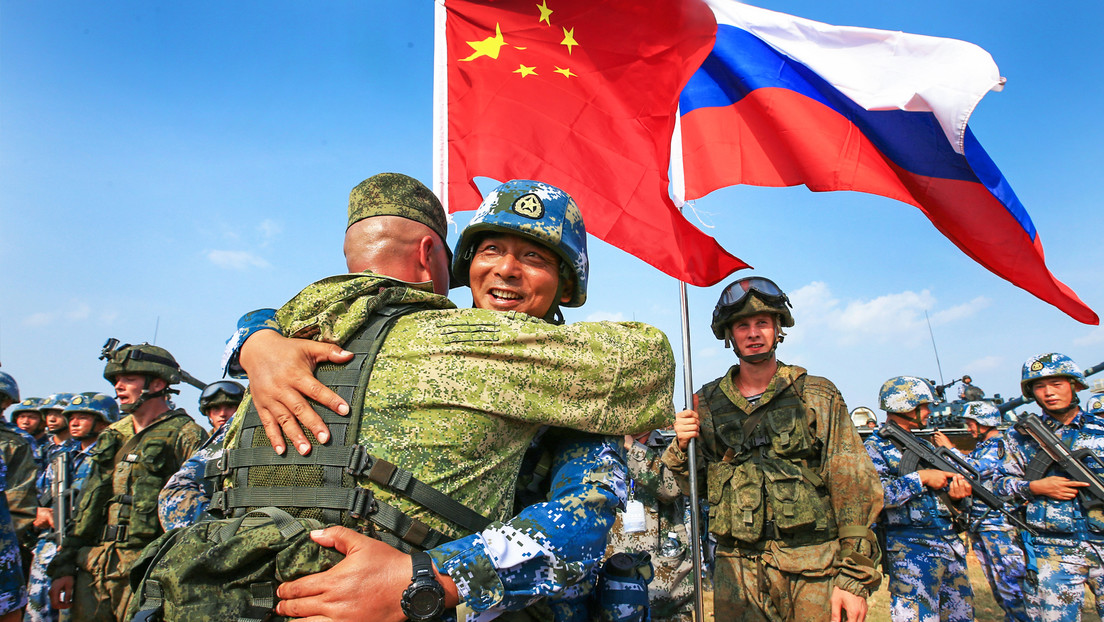
Cooperación militar entre Rusia y China.
Russian President Vladimir Putin and his Chinese counterpart, Xi Jinping, adopted a joint declaration in Beijing this Wednesday, ratifying the reinforcement of their comprehensive partnership and strategic coordination, as well as the deepening of relations based on good neighborliness, friendship, and cooperation.
In the defense section, the document indicates that both parties will continue to strengthen the traditional friendship between their Armed Forces and bolster mutual trust in the military sphere. Furthermore, Beijing and Moscow will continue "improving cooperation mechanisms, expanding the practice of joint exercises, air and sea patrols, reinforcing coordination and interaction in bilateral and multilateral formats, jointly responding to various challenges and threats, as well as maintaining security and stability at global and regional levels," the text states.
The declaration also dedicates a significant block to Russian-Chinese cooperation in the space sector. According to the document, Moscow and Beijing will continue implementing projects included in their national programs and aligned with their common interests, working to systematically raise the level of interaction in key areas. Among the mentioned sectors are the International Lunar Research Station, lunar exploration, and deep space exploration.
Additionally, both parties expressed their readiness to continue strengthening joint work on radio frequencies and satellite orbits, as well as continuously narrowing the cooperation and exchange of experiences between Russia and China in the fields of satellite internet and the Internet of Things (IoT).
"The parties note that today's world is chaotic, that geopolitical rivalry is intensifying, and that local conflicts and instability arise with increasing frequency," the declaration outlines.
Furthermore, it emphasizes that the "global deficit of peace, development, security, governance, and regulation of international relations continues to increase." In this context, Russia and China state that they firmly oppose hegemonism and unilateralism and reject a return to an order governed only by "the law of the jungle." The declaration also reaffirms "the authority and central role of the UN" in international affairs.
Finally, the text strongly condemns "any attempt at external dictate by force" aimed at undermining the processes of consolidation and cooperation under equal conditions in Eurasia. The declaration adds that China values the Russian initiative for an "equal and indivisible" Eurasian security architecture, designed to ensure a lasting order and allow the development of all states on the continent without the threat of external interference.
President Vladimir Putin and Chinese leader Xi Jinping met in Beijing to debate the most important and sensitive issues regarding bilateral relations. The negotiations were held in both restricted and expanded formats, with the participation of key members of the Russian delegation accompanying the president on his visit to China.
At the conclusion of the bilateral meeting, Putin and Xi also adopted a joint declaration on the establishment of a multipolar world and a new type of international relations. Additionally, senior Russian and Chinese officials signed at least 20 agreements.
Add new comment