
The Pulse of a World Seeking Healing

On a convalescent and fragmented planet, which recently celebrated World Health Day, WHO invites us to understand health under the "One Health" approach, where human well-being is inseparable from the balance of animals, plants, and environment we inhabit.
Under the slogan "Together for Health." “Support Science,” this year’s global campaign, stands as a bulwark against misinformation, asserting that every vaccine, every emergency protocol, and every public policy must be born from the laboratory and evidence, not from chance or prejudice.
The WHO’s most recent report and its emergency call for 2026 highlight the ongoing humanitarian crisis.
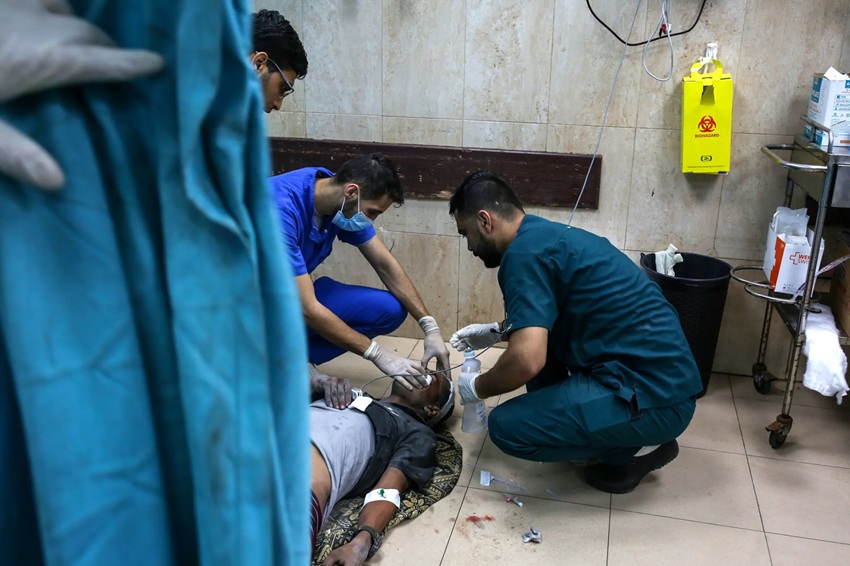
The World Health Organization has issued a red alert to assist millions of people trapped in contexts of conflict and extreme fragility, where access to basic services, more than a right, has become almost a daily miracle.
In this scenario, science emerges as the tool to restore systematic vaccination and prevent epidemic outbreaks in areas where the social fabric has been torn apart, reminding us that scientific knowledge loses its luster if it’s not translated into equity and universal access.
Latin America and the Burden of the Gap
Looking at our region, the picture is marked with contrasts. The Pan American Health Organization's (PAHO) assessment for the end of 2025 and the beginning of 2026 reveals a troubling paradox: while digital health and telemedicine are gaining ground, diseases that were thought to be under control are once again showing their teeth.
Measles has been the main health setback in the Americas, forcing governments to redouble their efforts in epidemiological surveillance and vaccination coverage, which has faltered in territories with persistent access barriers.
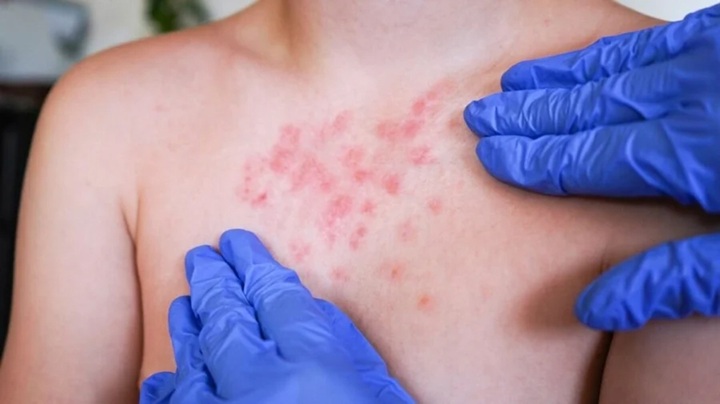
According to the PAHO strategic assessment, coverage of the third dose of the diphtheria, tetanus, and pertussis (DTP3) vaccine—a standard indicator of the robustness of health systems—fell to 83%, leaving some 2.4 million children unprotected or with incomplete vaccination schedules.
This vulnerability has translated into a 400% increase in suspected measles cases in border areas and areas of high population mobility during the last two years, marking the most significant setback in immunization in the last three decades.
On the other hand, mental health in the Americas has become a "silent epidemic," with data that demand immediate action. The Pan American Health Organization (PAHO) points out that average public spending on mental health in the region is barely 3% of the total health budget, even though mental and neurological disorders account for almost a third of all years lived with disability.

This financial imbalance (https://opendata.paho.org/es) underscores the need for a re-engineering of public investment so that psychological science is not a privilege for the few.
Nevertheless, there are glimmers of hope in regional management. PAHO highlights significant progress in the control of malaria and HIV, as well as a steady commitment to the sovereign production of medical supplies.
An example of this regional scientific strength is the agreement for the manufacture of pneumococcal vaccines at affordable prices, a strategy that seeks to safeguard health security against fluctuations in the international market.
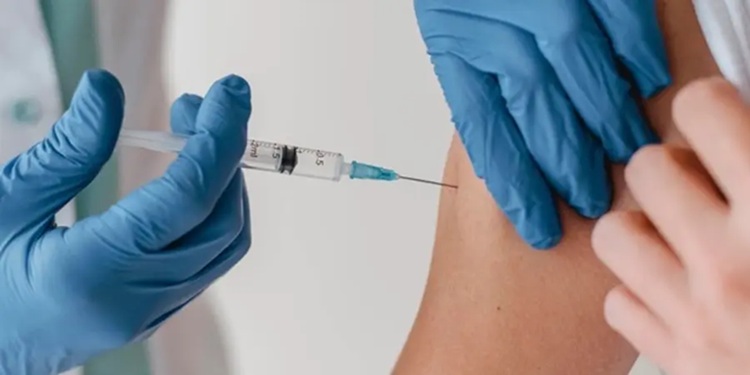
According to the organization, resilience in Latin America depends now more than ever on the ability to share information in real time and to strengthen primary care as the first line of defense for life, as well as on political will, which is never a minor condition.
Inequities and Global Health
The latest WHO World Health Statistics report reveals a stark reality: despite technological advances, out-of-pocket health spending continues to push nearly 2 billion people into extreme poverty or worsen their precarious situation.
The life expectancy gap between high- and low-income countries remains stagnant at 18.1 years, a figure that calls into question the effectiveness of global equity policies.
Furthermore, the WHO estimates that by 2030 there will be a shortage of 10 million health workers, especially in low- and middle-income countries, making scientific and technical training an urgent matter.

The burden of non-communicable diseases (NCDs) has also climbed the ranks in the horrific statistics. Currently, NCDs are responsible for 74% of all deaths worldwide, and most alarmingly, 86% of premature deaths from these causes occur in developing countries.
These WHO data demonstrate that medical science must not only focus on curing, but also on modifying the social determinants that dictate who lives and who dies prematurely.
Cuba: Challenges to the Doctors
In the particular case of Cuba, the health narrative is currently being written with strokes of a tested resilience. PAHO's annual reports on the island recognize historic achievements that Cuba is committed to maintaining, such as the elimination of mother-to-child transmission of various diseases and the strengthening of the human milk bank network.
The difficult situation the country is currently experiencing, marked by the tightening of the blockade and the power crisis, directly impacts the efficiency of the hospital network. Despite having a density of 9.2 doctors per 1,000 inhabitants—one of the highest in the world according to OP records—the system's capacity to resolve medical issues is diminished by the lack of basic supplies and the deterioration of high-tech equipment.
Although infant mortality rate of 9.9 per 1,000 live births that Cuba recorded last year represents a challenge compared to the country's historical standards, health authorities emphasize that the Maternal and Child Health Program (PAMI) remains the absolute priority, maintaining strict monitoring of 100% of pregnant women and newborns through the network of family doctor and nurse clinics.
The system's resilience also relies on its scientific capital. During the main celebrations for the anniversary in Havana, it was highlighted that Cuba maintains one of the highest densities of healthcare professionals in the region, with more than 9 doctors per 1,000 inhabitants.
However, the accountability report to the National Assembly does not shy away from the difficulties: it acknowledges a direct impact on the availability of essential medicines, where the national industry, responsible for producing more than 60% of essential drugs, faces serious limitations in raw materials.
Despite these material shortages, the Cuban model is committed to sovereign innovation to mitigate the deficit of imported supplies. The strategy for 2026 prioritizes the use of Natural and Traditional Medicine, which already has a formulary of more than 170 natural products, and the strengthening of local biotechnology.

"Supporting Science," the motto for the recently celebrated World Health Day, means for Cuba safeguarding its technological sovereignty and demonstrating, as it already does in practice, that science is not an isolated entity, but rather the driving force behind the modernization of public health, especially through the integration of Artificial Intelligence (AI) and mathematical modeling.
According to recent reports, progress is being made in the application of AI algorithms for the prediction and personalized treatment of cardiovascular diseases, one of the leading causes of death in the nation.
This is a strategy that not only seeks to increase diagnostic accuracy, but also to optimize clinical protocols in a context where the efficient use of resources is vital.
The use of mathematical models, led by experts from the University of Havana, has also been crucial for controlling arboviruses such as Dengue and Chikungunya, allowing for the anticipation of epidemic peaks and the direction of vector control efforts based on solid scientific evidence.
On the other hand, biotechnological sovereignty continues to be the cornerstone of the country's health resilience, as emphasized in the Government's Economic and Social Program for 2026.
Image: Production of the drug Jusvinza
Photo: Estudios Revolución
A recent milestone in this process is the start of Phase 3 clinical trials of the drug Jusvinza to treat the aftereffects of Chikungunya, which reaffirms the capacity of the national industry to generate high-impact therapeutic solutions in the face of new epidemiological threats.
For the Cuban government, the link between science and health translates into a state policy that prioritizes the protection of essential services and the training of medical personnel capable of operating advanced technologies, ensuring that laboratory innovation reaches the doctor's office and the patient directly.
Translated by Amilkal Labañino / CubaSí Translation Staff
Add new comment