
Pope in Argentina Says Creating Jobs Must Be a Political Priority
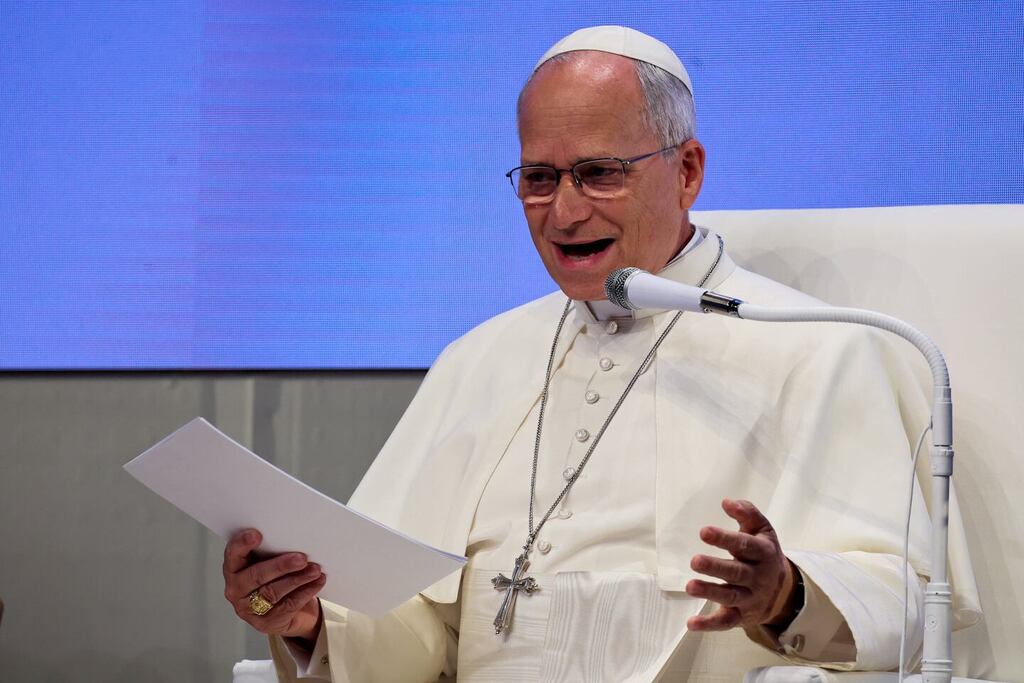
"Access to work must be a priority in public policies," Pope Leo XIV stated today before business leaders, trade unionists, and workers during a meeting at the Pontifical Catholic University of Argentina (UCA).
His exhortation resonated deeply with the hundreds of thousands of Argentinians who lost their jobs during nearly three years of neoliberal policies driven by the current government, quickly becoming a rallying cry for the labor unions advocating on their behalf.
In a speech marked by strong social and political content, the Pontiff asserted that denying work to an individual constitutes "severely wounding their dignity" and their ability to contribute to society. He also underscored that "the common good requires overcoming individualism," concepts that drew widespread applause from those in attendance.
Leo XIV reflected on the value of labor, human dignity, and the prevailing challenges confronting the global workforce. During his address, he noted that unemployment represents "a genuine tragedy" because it not only deprives individuals of income, but also impacts their dignity and excludes them from social life.
Furthermore, he warned of the risks surrounding artificial intelligence—emphasizing that it must not take precedence over human beings—and unregulated automation that could threaten employment. "Technology must always be subject to ethics; the algorithm cannot replace human discernment," he stated.
Leo XIV also addressed the role of business executives, trade unions, and grassroots popular movements. He vindicated the function of labor organizations in defending workers, though he urged them to pay special attention to precarious, informal, and excluded sectors of the formal economy.
Additionally, he highlighted demands for "land, housing, and work," calling for business activity to prioritize the common good rather than solely financial profit.
Finally, he called for building a unified Argentina capable of overcoming polarization through dialogue, solidarity, and social justice. In that regard, he urged society to put "the human being at the center of our decisions" and proposed restoring a culture of encounter to navigate economic, social, and technological shifts.
"Today, labor—in its anthropological foundation and global dimension—faces not only the fundamentals of the economy, but also the challenge of the ecological crisis and the irresponsible use of the planet's resources," he warned.
In a message of peace, the Pope urged the audience "not to destroy with our hands the garden that the Creator left us" and called on everyone to "build a better future for all."
Following the event, he traveled to the San Martín Palace, where he was received by Foreign Minister Pablo Quirno for a meeting with leaders of the Argentine clergy. After a mass that concluded just past noon, the Supreme Pontiff met with five victims of sexual abuse committed by Church representatives, listening to their testimonies and offering his blessing.
Add new comment