
The Legacy of the Cubans Who Fell in Grenada
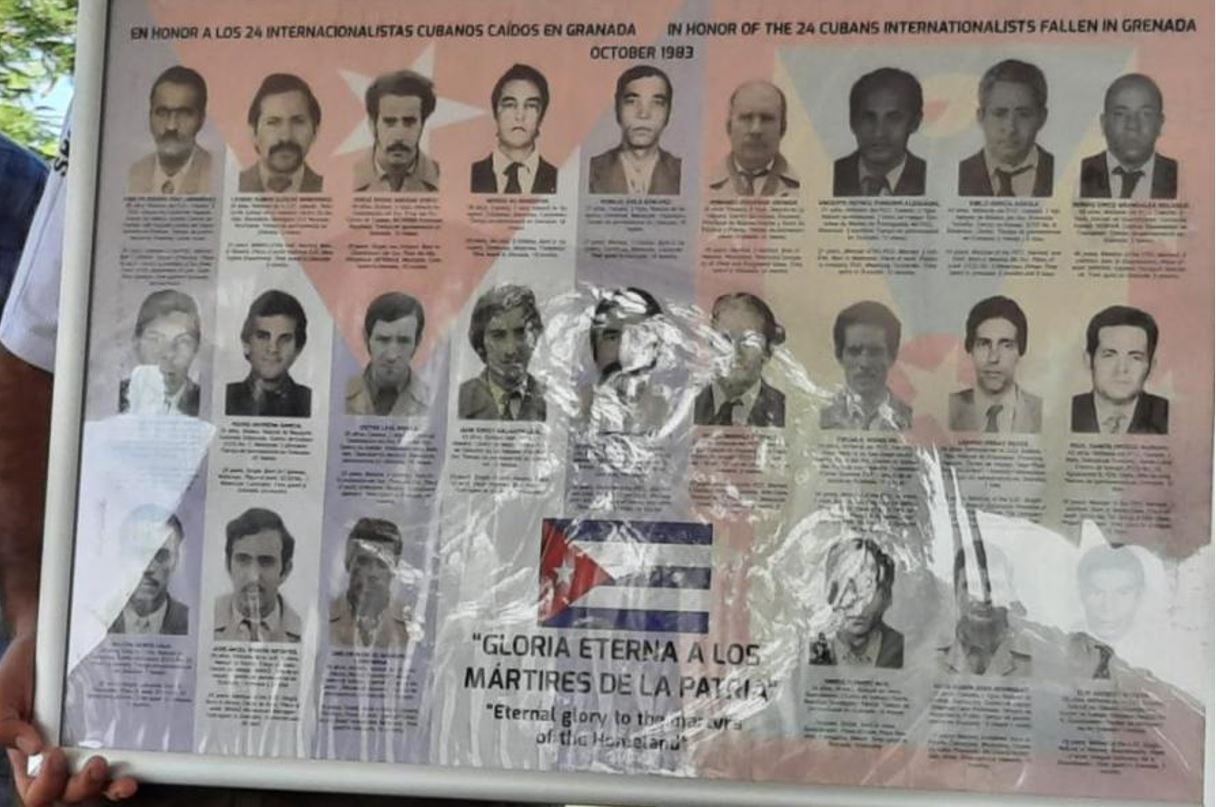
More than four decades later, the memory of the men who took up arms against imperialism in the Eastern Caribbean continue to hold a special place in the memory of both Cuba and Grenada.
Each year, as the memory of the vile U.S. invasion of Grenada—which took place in October 1983—resurfaces, the story of the Cubans who lost their lives during those events is brought back to mind. Their presence on the Caribbean island was not driven by primarily military objectives or economic interests; rather, they were part of cooperation projects that Cuba was carrying out alongside the Grenadian government in areas strategic to the nation’s development.
The relationship between Cuba and Grenada began to take shape in the months immediately following the triumph of the revolution led by Maurice Bishop. Just one month after that victory, the two nations established diplomatic ties and launched collaborative programs in sectors such as education, healthcare, agriculture, fisheries, sports, and construction. In this context, hundreds of Cuban specialists, workers, and a group of military advisors arrived in the small island nation—all prepared to share their expertise and contribute to the development of this sister nation.
Among the most significant projects was the construction of an international airport at Point Salines—one of the most ambitious undertakings of the young Grenadian revolution. For a nation facing geographical and economic constraints, this infrastructure represented an opportunity to boost tourism, strengthen communications, and expand the potential for growth. Cuban engineers, technicians, and laborers played a leading role in a project that symbolized Grenada’s aspirations for progress.
However, on October 25, 1983, the U.S. invasion dramatically altered the course of these efforts. The Cuban personnel present in Grenada mounted a resistance against the attacks launched by regular United States military forces. The U.S. government, steeped in the paranoias and dire logic of the Cold War, authorized Operation Urgent Fury. Beyond the justifications put forward by imperialism at the time, the assault on Grenada was intended to collapse an indigenous revolutionary process that was deeply rooted among the people. In the fighting, 24 Cuban internationalists lost their lives; their stories have since become part of the shared memory that binds the two nations together.
More than four decades later, the memory of the men who took up arms against imperialism in the Eastern Caribbean continues to hold a special place in both Cuba and Grenada. Their sacrifice is remembered as an expression of the spirit of solidarity that defined the collaboration between the two countries during those years.
The memory of these Cuban internationalists has become forever linked to the history of the airport, the friendship between the two peoples, and a period of profound transformation for the nation of Grenada. During a visit to the "Spice Isle" in August 1998, Fidel Castro paid tribute to those who lost their lives in the events of October 1983 and highlighted the significance of the project they had helped to build:
“To the emotion I felt just moments ago, upon setting foot on Grenadian soil—to which we are bound by such strong and special ties—is now added the emotion of unveiling this plaque in memory of the Cubans who gave the very best of themselves to this sister nation in the Caribbean: their sweat and their effort, their joy and enthusiasm, their fighting and working spirit, and their generous blood.”
The passage of time has not erased the significance of those events. The friendship between Cuba and Grenada has continued to grow stronger through cooperation programs, official exchanges, and gestures of solidarity. Throughout this journey, the memory of the Cubans who fell during the 1983 invasion has continued to hold a significant place in a relationship that has now spanned nearly half a century.
Add new comment