
HRW Again Denounces Israeli Army's Use of White Phosphorus in Lebanon
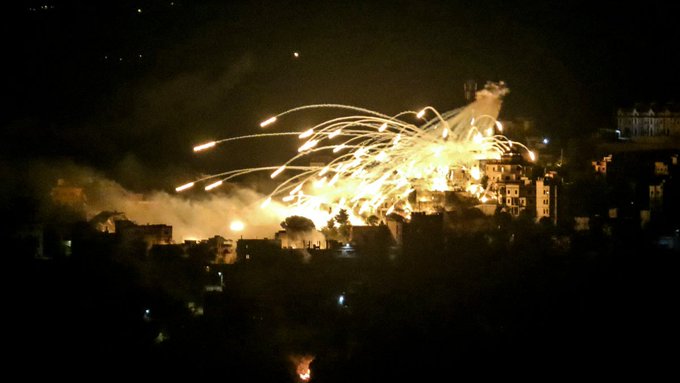
Una munición de fósforo blanco explota en el aire sobre edificios en la localidad de Khiam, en el sur del Líbano, durante un bombardeo israelí el 31 de octubre de 2024. Foto: AFP via Getty Images
Human Rights Watch (HRW) on Wednesday again documented the continued use of white phosphorus by the Israeli army in Lebanon, underscoring the need for new international legislation to regulate these "devastating weapons."
The organization documented 23 incidents in which Israeli troops used these munitions in southern Lebanon between March and May 2026, according to a joint report published with the International Human Rights Clinic (IHRC) at Harvard Law School.
"White phosphorus munitions can cause unbearable burns and result in permanent physical, psychological, and socioeconomic harm," stated Bonnie Docherty, senior arms advisor at HRW and a lecturer at IHRC.
Countries must condemn the continued use of these weapons, "demand" new international negotiations on the matter, and ensure that international law adequately addresses their "unacceptable" human cost, Docherty added.
Unregulated Weapons
White phosphorus munitions—chemical and incendiary agents that ignite upon contact with oxygen, producing intense fire and dense smoke—are not currently regulated by any specific treaty.
Thus, these weapons are not covered by the 1980 Protocol III of the Convention on Certain Conventional Weapons (CCW), which aims to regulate incendiary weapons, even though they violate international humanitarian law when used.
The protocol defines incendiary weapons as those "primarily designed to set fire to objects or to cause burn injury to persons," which leads to the exclusion of munitions designed for other purposes—such as white phosphorus, originally created to obscure or illuminate military actions—even if they produce the same incendiary effects.
Likewise, they are not considered chemical weapons because they are not designed for use due to their toxicity, and therefore cannot fall under the Chemical Weapons Convention.
Stronger Legislation
For the organization, the burns caused by this material—which can char down to the bone—must be treated with the same repugnance as other poisonous gases and blinding lasers, as they are "inhumane and contrary to public conscience."
"Stronger and more specific international legislation is needed to address these issues," the report adds, while calling for international law to close "legal loopholes" and stigmatize the use of these weapons.
Human Rights Watch had already denounced in March Israel's use of white phosphorus on homes in southern Lebanon, where the substance caused fires in at least two residences in the area.
Add new comment