
Honduras in Freefall: The Troubled Rise of Nasry Asfura
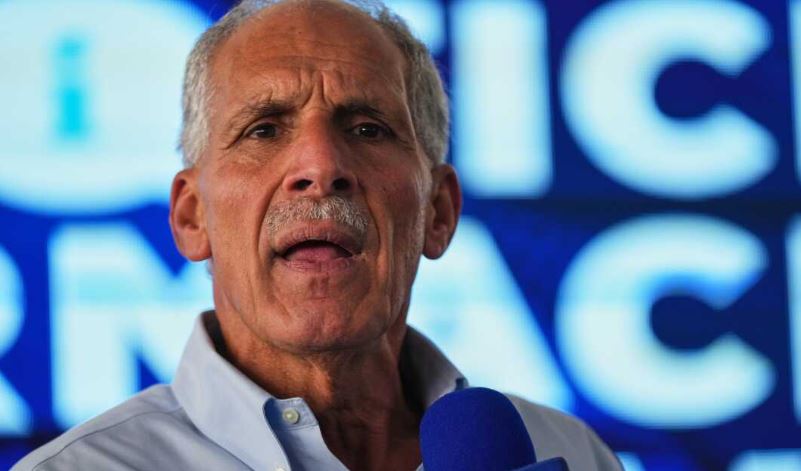
Nasry Asfura
The disputed ascent of Nasry Asfura to the presidency of Honduras — widely regarded as engineered with the backing of Donald Trump — has already set in motion a series of deeply troubling developments: the effective removal of 168 Cuban medical professionals contracted by the previous government, the onset of killings targeting left-wing community leaders, attempts to prosecute electoral officials who denounced alleged fraud, and the cancellation of infrastructure projects that were nearly complete under former President Xiomara Castro.
Asfura took office under a cloud of unanswered questions about electoral fraud. But the controversy did not end there. The weight of Trump's endorsement, the political legacy of convicted drug trafficker Juan Orlando Hernández, a two-party system built on impunity, and a state long captured by economic elites have all shaped the contours of this new administration from its very first days.
His government has announced plans to dismantle 38 public institutions under the banner of "state reduction," while cabinet appointments have revealed a pattern of nationalist-era holdovers, family connections, and a pronounced gender gap — with only 15 women among the first 36 positions announced.
A President Under Legal Scrutiny
Asfura is no stranger to Honduran political life. He served eight years as mayor of the capital and previously held a congressional seat, during which his construction and waste management companies accumulated lucrative municipal contracts.
His legal troubles date to 2024, when the specialized anti-corruption unit known as Fuerce charged him and other former municipal officials with operating a money-laundering network through which more than 28 million lempiras were allegedly diverted from city coffers between 2017 and 2018. Prosecutors contend the funds were used to finance political campaigns, cover unofficial municipal expenses, and pay personal credit card bills — including purchases of jewelry — for Asfura and his daughters.
He faces charges of embezzlement, money laundering, abuse of public office, use of falsified documents, and fraud. In October 2024, a court granted him conditions short of pretrial detention. By December, those conditions were lifted, the case was transferred to the Supreme Court, and as of his inauguration, no initial hearing had been scheduled.
A Ceremony of Symbolism and Stumbles
Asfura was sworn in before the National Congress, surrounded by a small circle of supporters and prominent religious symbolism from both Catholic and Evangelical churches. His address drew more attention for its expressions of gratitude than for the substance of its proposals. He attributed his rise to power to "the grace of God," thanked electoral authorities and the armed forces, and called for governing without partisan distinction — without once addressing fraud allegations or the exclusion of votes.
In a moment that drew widespread attention, he confused the Constitution with the Bible, declaring: "I make the solemn promise to uphold the constitution, the laws, as the sacred commandments dictate."
The Hand of Washington
Four days before the November 30 general election, Trump publicly endorsed Asfura and vetoed Liberal Party candidate Salvador Nasralla. Two days later, he conditioned U.S. economic support on a nationalist victory and announced a pardon for Juan Orlando Hernández — sentenced to 45 years in a U.S. federal court on narcotrafficking charges. On the night of the vote, Trump went further, accusing Honduran electoral officials of "changing the results" and "abruptly interrupting the vote count."
In contrast to the inauguration of Xiomara Castro, which was attended by then-Vice President Kamala Harris, Asfura's swearing-in drew only the U.S. Embassy chargé d'affaires.
A Conservative Offensive
The new government has moved quickly on a range of ideologically driven fronts: proposals to introduce the Bible into public school classrooms, repression of feminist demonstrations, and signals of a broader rollback of rights for women and girls — all of which pose a direct challenge to Honduras's status as a secular state.
Analysts have identified several dominant shadows over the Asfura presidency. The first is Trump, whose influence over the electoral outcome now shapes Honduras's position on migration, tariffs, security, and counternarcotics cooperation. The second is the specter of Juan Orlando Hernández, whose political network Asfura has sought to distance himself from publicly, even as chants of the former president's name were heard outside the inauguration ceremony. The third is the entrenched power of economic elites — particularly investors tied to the controversial Special Economic Development Zones, known as ZEDEs — whose lobbying in Washington is widely credited with helping secure Trump's decisive endorsement.
Though Asfura has campaigned on a platform of shrinking the state, observers note the irony that his principal international patron has done precisely the opposite: using state power as a tool for personal authority, impunity, and geopolitical control.
Translated by Sergio A. Paneque Díaz / CubaSí Translation Staff
Add new comment