
Hantavirus: Alert at Sea

The World Health Organization (WHO) has issued a critical update regarding the unusual hantavirus outbreak aboard the Dutch-flagged cruise ship MV Hondius.
The vessel, which originally departed on a voyage from Argentina to Cape Verde, has become the focus of an international medical emergency that has claimed the lives of three people and has a total of eight reported cases as of this writing.

However, WHO is categorical in its assessment: the risk to global public health is low, and the world is not facing the start of a new pandemic.
Chronology of an emergency
The outbreak began quietly in early April. The first person affected was a man who showed symptoms on April 6 and died aboard the vessel just five days later, on April 11.
Because his clinical presentation resembled that of several acute respiratory illnesses, hantavirus was not initially suspected, and no medical samples were taken.
International alarm was raised weeks later when the wife of this first deceased man, who had disembarked on the island of Santa Elena, after presenting symptoms, saw her health deteriorate dramatically on a medical evacuation flight to Johannesburg on April 25.

Sadly, the woman died the following day. Analysis of her samples, carried out at the National Institute of Communicable Diseases (NICD) in South Africa, revealed the true culprit: the Andes virus, a lethal strain of hantavirus.
To date, the crisis has resulted in three confirmed deaths, including that of an elderly passenger who died on board on May 2.
Additionally, five other patients have been affected by the outbreak. One man, who was evacuated from Ascension Island to South Africa, is recovering well after being in intensive care; three other passengers were transferred directly to the Netherlands for treatment; two of them are stable, and one, asymptomatic, is in Germany.

The eighth case was recently identified in Zurich, Switzerland, and involves a passenger who had disembarked weeks earlier in Saint Helena.
Why is the Andes virus different?
The strain responsible for this outbreak, the Andes virus, is an endemic variant found in Latin America. Epidemiological investigations indicate that the couple who caused the infections on board had taken a birdwatching trip through Argentina, Chile, and Uruguay before boarding the ship. During this trip, they visited rural habitats that are home to the rodent that naturally carries the disease.
Unlike the vast majority of hantaviruses—which are transmitted exclusively through human contact with infected rodents, their feces, urine, or saliva—the Andes virus is the only documented species capable of limited human-to-human transmission.
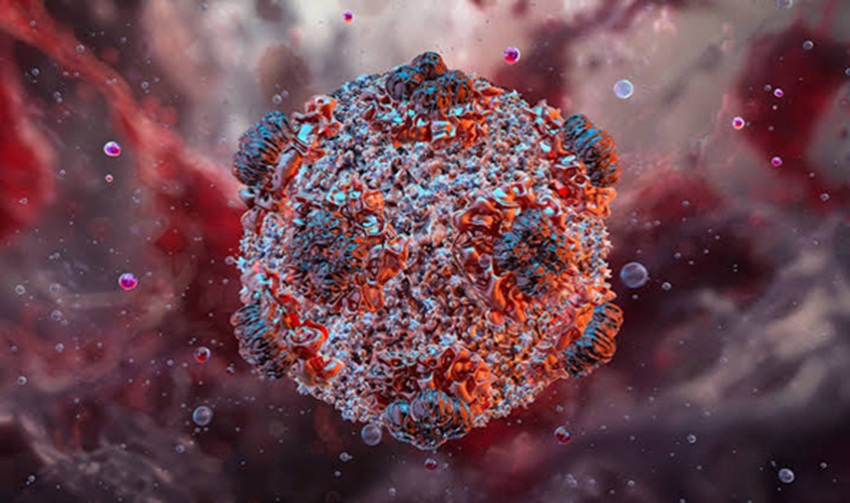
However, WHO specialists are calling for calm and urging caution. Dr. Maria Van Kerkhove, Head of the Emerging Diseases and Zoonoses Unit and Acting Director of the Department of Epidemic and Pandemic Preparedness and Prevention at WHO, strongly emphasized that "this is not SARS-CoV-2."
They explained that this hantavirus does not spread massively through the air. For human-to-human transmission to occur, close, prolonged, and intimate contact is required, such as that which occurs when providing medical care or sharing a confined space with a patient.
This outbreak on the ship is highly similar to one that occurred in a confined environment in Argentina between 2018-2019, which resulted in 34 infections and was successfully contained by isolating the patients.
Operation onboard
Thanks to a significant gesture of diplomatic cooperation and the moral obligation invoked by the President of the Spanish Government, Pedro Sánchez, the MV Hondius was sailing at the time of this writing towards the Canary Islands, whose medical facilities will serve to manage the crisis permanently.
Onboard, passengers are under a strict preventive confinement regime to prevent the spread of the virus. They have been confined to their cabins, which are constantly disinfected, and are provided with food and water in isolation.

In addition, they are required to wear medical masks if they need to leave their cabins. Despite the deep concern and moments of panic reported by some crew members, direct reports from the ship's captain indicate that morale has improved significantly since the ship resumed its voyage and reached a safe port of destination.
To ensure continuous clinical monitoring, a specialized team comprised of a WHO expert, an expert from the European Centre for Disease Prevention and Control (ECDC), and two Dutch infectious disease specialists boarded the ship in Cape Verde. Their objective is to thoroughly assess the medical condition and risk level of each individual on board in order to organize a phased disembarkation that poses no health risk to Spanish residents.
Global contact tracing under the scientific microscope
As this is an international cruise, the network of contacts has inevitably spread across the globe. The WHO has formally notified twelve countries—including the United States, Canada, the United Kingdom, and Singapore—that they have citizens who disembarked from the ship in ports prior to the main outbreak, thus triggering a massive retrospective epidemiological tracing effort.

Given the virus's extended transmission period, health authorities are implementing active monitoring protocols for up to 42 days (six weeks) for those who were potentially exposed.
Alongside this effort, world-class laboratories located in South Africa, Switzerland, and Senegal (Pasteur Institute of Dakar) are working at full speed on the genomic sequencing of the virus in order to identify any unusual mutations.
Argentina, demonstrating its profound expertise in managing this disease, has contributed by sending 2,500 rapid diagnostic kits to laboratories in five different countries.
Don't panic.
The risk of this outbreak becoming a pandemic is low, according to the official WHO assessment.
The main reason for this low risk, which is expected to avoid both an epidemic and a pandemic, lies in the nature of its transmission.
Unlike SARS-CoV-2 (the virus responsible for the COVID-19 pandemic) or influenza, the Andes virus does not spread massively through the air in the same way. Although it is the only known hantavirus capable of human-to-human transmission, this capacity is very limited and requires close, intimate, and prolonged physical contact, as mentioned above.
This level of exposure occurs primarily among members of the same household, intimate partners, or healthcare workers attending to infected patients without adequate protective equipment.
Furthermore, specialists point out that this particular outbreak is taking place in a closed and very specific environment, such as a cruise ship.
The documented precedent in Argentina between 2018-2019 already demonstrated that the chain of transmission of the Andes virus can be successfully broken. Therefore, as long as the corresponding public health measures are applied, such as thorough contact tracing, quarantine, and proper isolation of confirmed cases, the expectation is that this will remain a limited outbreak without major impact on the rest of the world.
Currently, there are no approved vaccines or specific antiviral treatments to combat the Andes virus; early intervention and intensive care are the only effective medical defenses. Image
Dr. Tedros Adhanom Ghebreyesus, WHO Director-General
However, the collaboration demonstrated throughout this crisis proves the full validity and effectiveness of the International Health Regulations. As Dr. Tedros Adhanom Ghebreyesus, WHO Director-General, concluded, this outbreak leaves us with a powerful lesson: "Viruses don't care about our politics, and they don't care about our borders... the best immunity we have is solidarity."
Translated by Amilkal Labañino / CubaSí Translation Staff
Add new comment