
Fuel Restrictions and Their Inflationary Impact on Cuba's Economy
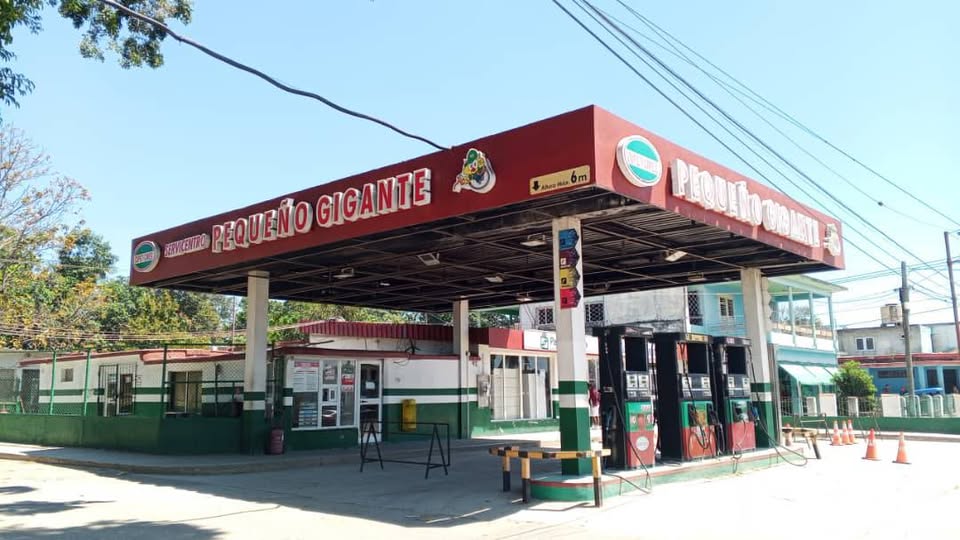
A surge in prices for high-demand goods has proliferated in recent weeks across social media platforms, private businesses, informal markets, and other public spaces throughout nearly the entire country.
Some Cubans have argued there is no justification for the increases, pointing to Resolution 225/2025 issued by the Ministry of Finance and Prices, which maintains regulated prices for items such as cut chicken, cooking oil (excluding olive oil), powdered milk, pasta, sausages, and detergent — all of which are exempt from customs duties to facilitate their importation and sale.
However, as one Facebook user, Mayle Teruel, noted, Resolution 225 was issued when the official exchange rate stood at 1 USD to 124 Cuban pesos. Today that rate sits at 1 to 450, and transportation costs feed directly into the pricing structure. The resolution, the user argued, should be updated to reflect current exchange rates.
Within the network of the National Association of Economists and Accountants of Cuba, expert Joel Ernesto Marrill Domenech recently stated that, from an economic standpoint, the consequences of fuel restrictions extend well beyond power outages — and will ultimately be felt by the population in the form of inflation.
"In the long run, it is a cost shock. It will be transmitted primarily through the price of fuel, hitting food and transportation. And through the exchange rate channel, due to increased demand for foreign currency to purchase fuel in dollars," Marrill explained during a discussion with colleagues.
The limitations on fuel supply, and their cascading effect on key economic and social activities, represent one of the most pressing concerns for Cuban families, who are experiencing a significant erosion of purchasing power as the prices of staples such as grains, root vegetables, greens, and meat continue to climb.
This trend has persisted over recent years but has intensified sharply with the latest deterioration of the country's economic crisis — driven by fuel scarcity, prolonged power outages, and external restrictions on energy supplies resulting from the tightening of the United States' blockade policy, which Cuban authorities say is designed to strangle the island and its people.
Using fuel scarcity as a pretext, private transportation operators have doubled or tripled fares for both passenger and cargo services, generating additional social and economic imbalances across the country.
Economists have cautioned that for as long as fuel import restrictions remain tightened, the economic impact is expected to be not only recessionary but also inflationary — with direct consequences for Cuban households.
On the ground, the numbers are stark. "Two weeks ago, cooking oil was 920 pesos. Then it disappeared, and now it's back at 1,200. Eggs have gone back up to 2,700, and the same is happening with many other products," said a Havana resident named Miriam, holding up a nearly empty shopping bag that spoke for itself.
"Bread has more or less held steady, but chicken has gone up to 450 pesos per pound in some places, spaghetti to 500, tomato paste to 500, and toothpaste to 400," reported a man named Ernesto outside a private business.
In response to rising prices and speculative pricing practices, the government conducted its Second National Exercise Against Price Violations from February 21 to 23. According to the Ministry of Finance and Prices, more than 25,100 inspections were carried out, resulting in the detection of irregularities or violations at 17,929 establishments. A total of 17,000 fines were levied, along with additional sanctions including forced sales, seizures, business closures, revocation of operating licenses for non-state enterprises, and enforcement actions against illegal operators.
While the government pursues enforcement measures and seeks alternatives at the local level, economists and authorities alike acknowledge that a lasting solution will require expanding domestic production of goods and services through Cuba's own efforts and ingenuity.
Add new comment