
Defending Cuba Is Defending Justice and Sovereignty
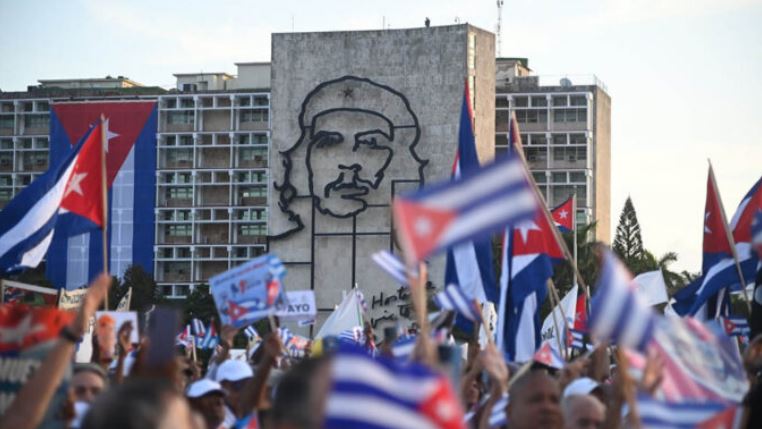
The recent history of Cuba cannot be understood without recognizing the magnitude of the threats that have loomed over the Island to this day. The economic blockade, media campaigns, and diplomatic pressures have sought to isolate it. Despite this, tens of thousands of people across the globe have made the defense of Cuba their own, because it is also the defense of the dignity of all peoples.
Since its inception, the Cuban Revolution became a beacon for progressive movements worldwide. Its example of steadfastness against imperialism inspired generations of fighters in Latin America, Africa, and Asia, and also garnered sympathy in European social sectors. Thus, the changes that arose following the defeat of the Batista tyranny did not have a merely domestic impact; the revolution transcended borders and became a banner of progress that remains standing today.
Cuba's international projection since 1959 was not limited to the symbolic realm. Over the last six decades, multiple events have linked the history of the Cuban people to the history of the peoples of the so-called Third World. From the early resistance of a Cuban contingent against the U.S. invasion of Grenada in October 1983, the participation of tens of thousands of Cuban civilians and military personnel in liberation movements in Africa, the deployment of health programs like Operation Miracle and education initiatives like Yes, I Can in various nations, to the participation of medical brigades in countries hit by natural disasters and pandemics, the largest of the Antilles has led an exceptional history of international solidarity.
It must not be forgotten that this vocation for solidarity has come at a human cost. Many internationalists gave their lives in distant lands, almost always convinced that justice knows no borders. This sacrifice is a testimony to the coherence of a project that does not limit itself to proclaiming principles but turns them into concrete actions, evident in every battle fought beyond the fatherland's limits.
That is why, when threats intensify today and discredit campaigns multiply, defending Cuba also means defending the justice and sovereignty of all peoples who resist the imposition of external powers. Solidarity with the Island becomes a common battle against hegemony. To rise against the hostile policies of U.S. imperialism is to support the right of a people to live in peace and decide their own destiny without impositions; it is to support the steadfastness of a country in which dreams and hopes continue to be forged for many inhabitants of the planet.
In the midst of a sharpened offensive by the U.S. government against Cuba in 2026, featuring new energy sanctions and attempts at political destabilization, international solidarity becomes an urgent necessity. Every statement, every march in defense of the Cuban Revolution, every manifesto denouncing aggressions against Cuba, constitutes an act of defense of sovereignty and justice. Conversely, those who opt for silence in critical circumstances run the risk of becoming accomplices to the enemies of Cuban sovereignty.
Times like these call us to remember the words of Fidel Castro when, on May 8, 1959, he pointed out: “Our Revolution needs the solidarity of other brotherly peoples (...) to become stronger, to become firmer, and to carry forward a program of the vastest dimension.” That call remains relevant because with the survival of this revolution, a project of sovereignty, social justice, and solidarity also survives—one that is worth defending for Cuba and the other peoples of the world.
Translated by Sergio A. Paneque Díaz / CubaSí Translation Staff
Add new comment