
Cuban Solidarity in Latin America and the Caribbean: Legacy and Challenges
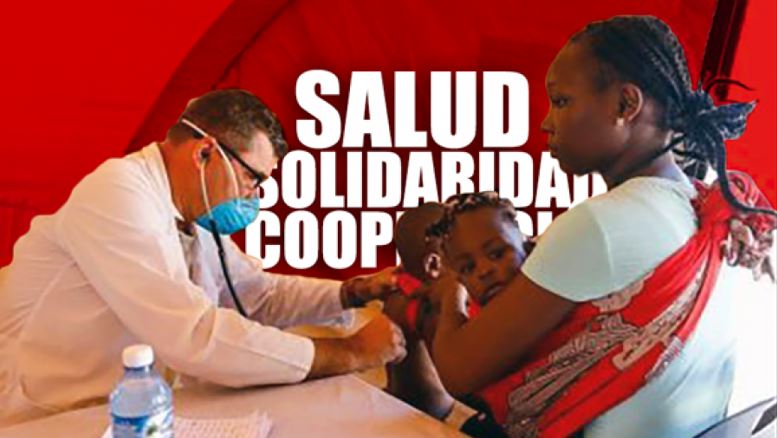
From its beginnings in Algeria in 1963, Cuban medical collaboration became a symbol of international solidarity. That foundational mission, at a time when the development of Cuban medical sciences was still in its infancy, paved the way for dozens of countries in Africa, Asia, and, with particular force, in Latin America and the Caribbean.
Since then, Cuban doctors have brought more than just technical knowledge to every setting. They have brought trust, support, and the confirmation that health can be a universal right, not just a privilege for those who can afford it. This has been the case in rural communities in Venezuela, in the outlying neighborhoods of Brazil with the Mais Médicos (More Doctors) program, and in remote areas of Bolivia, Haiti, Honduras, and Caribbean islands, where the presence of a Cuban doctor has often meant the difference between life and death.
Cuba's healthcare work cannot be excluded from the history of Latin America and the Caribbean. Even during epidemics or natural disasters, medical brigades have been present. During the COVID-19 pandemic, for example, brigades from the Henry Reeve Contingent, specialized in critical situations, arrived, remained, or were reinforced in several nations across the continent.
Cuban collaboration in health matters has not only been expressed in patient care. Another facet has been capacity building. Countless young Latin Americans have been educated at Cuban medical universities, later returning to their countries of origin as well-trained professionals, both technically and ethically. This combination of direct assistance and professional training has been key to strengthening potentially fragile health systems.
However, in recent years several programs have ended abruptly as a consequence of external influences. Governments complicit in the hostility of U.S. imperialism toward Cuba, or subjugated by pressure and conflicts of interest, have been responsible for their termination. Campaigns to discredit their cooperation have brought an end to the presence of Cuban doctors in their territories. The result has been propaganda about nonexistent solutions, broken promises… a void in healthcare coverage that local or international systems have failed to fill in practice.
The case of Brazil, where a massive program was deployed starting in 2013, is illustrative: after the departure of the Cuban specialists in 2018, tens of thousands of people in indigenous communities, rural areas, and favelas were left without primary care. Subsequent reports demonstrated that there were no viable alternatives to replace the coverage guaranteed by the Cuban professionals. Similar situations have been reported in other nations of the hemisphere after the termination of cooperation agreements with Cuba.
The paradox is evident: while the collaboration is questioned for political reasons and with fallacious arguments, the people who lose the Cuban doctors face a decline in basic health indicators. Infant mortality, maternal care, the control of preventable diseases, and other health indicators are affected. However, no agreement termination or smear campaign can overshadow Cuban medical collaboration, which continues to be recognized by international organizations, local authorities, and its main beneficiaries: the communities that have received its support.
More than six decades after its beginnings in Algeria, Cuban medical collaboration remains a commitment that transcends borders. In Latin America and the Caribbean, where health inequalities persist, the Cuban example demonstrates that saving lives is more important than any political calculation.
Translated by Amilkal Labañino / CubaSí Translation Staff
Add new comment