
Cuban Rangers Corps Reports on Forest Fires
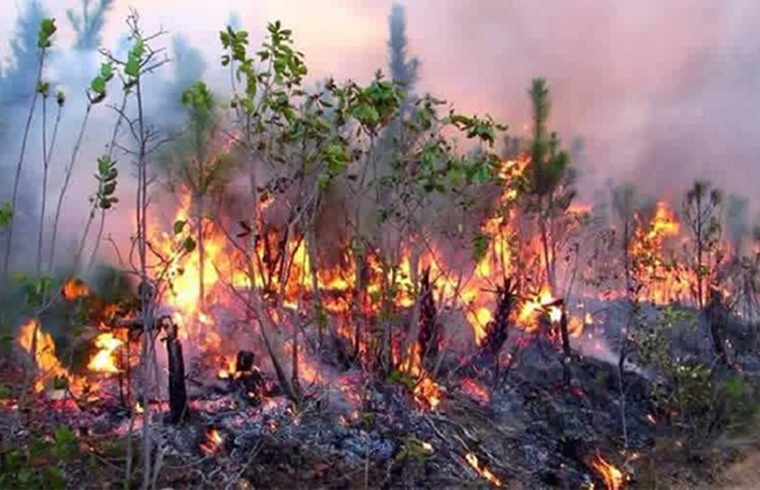
Foto: tomada de ACN
The Cuban Rangers Corps (CGC) announced the occurrence of 111 forest fires across the majority of the country's provinces from the start of its national campaign in January until April 30.
During these four months alone, a report from its Fire Management Department specified, exclusively to the News Agency, that the preliminary figure for damaged area amounted to 3,174.55 hectares in both natural and planted forests.
The report added that the territory of Pinar del Río recorded 46 fires impacting 2,912.60 hectares, followed by Matanzas and the Isle of Youth with 16 fires each (damaging 58 and 34.21 hectares, respectively), and Artemisa with 14 fires affecting 67.74 hectares, in a summary of the locations with the greatest impacts.
It clarified that this group accounted for the majority of the incidents, with 162 fires (including localized outbreaks) impacting 3,072.55 hectares; meanwhile, no fires occurred in Havana, Mayabeque, Camagüey, or Guantánamo.
The CGC, part of the Ministry of the Interior, presented its traditional national campaign at the beginning of the year, backed by a countermeasure plan during the theoretical session of the National Exercise Against Forest Fires.
Conducted studies and over 25 years of experience show that regions in Cuba possess conditions conducive to more intense and larger-magnitude fires, caused not only by the impact of climate variability but also by human irresponsibility.
Although operations traditionally run from January to May, there is evidence of a shift in behavioral patterns, and occurrences now extend into the months of June, July, and August. This is associated with elements related to the prolongation of the dry season in the nation and specific meteorological variables.
The highest risk period is between January and May, when 96% of fires occur; however, March and April stand out for the highest historical frequency.
According to the Danger Prediction Index, the areas most exposed are Pinar del Río, Matanzas, Villa Clara, Camagüey, Holguín, and the special municipality of the Isle of Youth. Nevertheless, in general, "90% of their causes are of human origin," and the perception of risk remains notably low among the population.
Add new comment