
Cuban Foreign Minister Denounces US Fuel Siege on the Island Nation
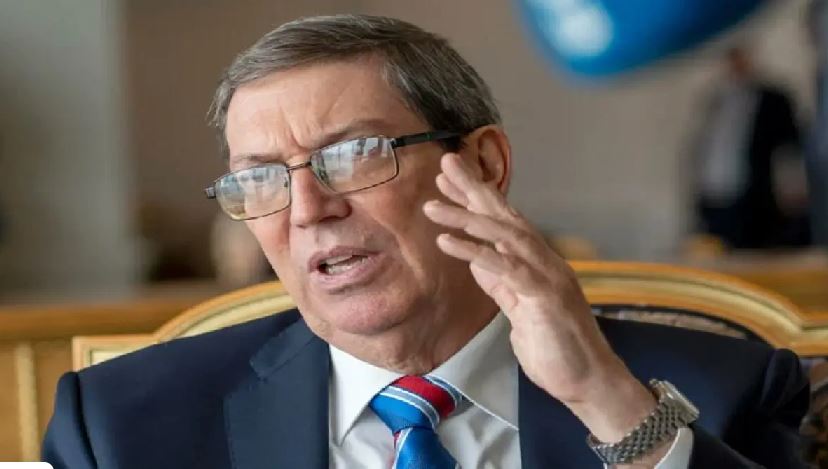
Según explicó Rodríguez Parrilla, la intimidación a las navieras internacionales ha impedido la llegada de barcos con mercancías básicas y ha dejado varados en puertos de la región más de 7.000 contenedores con medicamentos y dispositivos médicos destinados al sistema de salud de la isla. Foto: teleSUR
The Minister of Foreign Affairs of Cuba, Bruno Rodríguez Parrilla, warned that the escalation of United States policy toward the island has reached a "qualitative change" that includes a siege on fuel supplies comparable to a naval blockade.
In an interview granted to British academic Helen Yaffe for the podcast Cuba Análisis, the Cuban Foreign Minister affirmed that recent executive orders approved by the US administration in 2026 have intensified the economic choking of the Cuban people.
According to Rodríguez Parrilla, intimidation directed at international shipping companies has prevented the arrival of vessels carrying basic goods and left stranded in regional ports more than 7,000 containers filled with medicines and medical devices destined for the island's healthcare system.
"An oil siege comparable to a naval blockade has been imposed, the objective of which is to prevent fuel from reaching Cuba; at a certain point, it was even accompanied by the presence of military vessels and a military deployment in the Caribbean," asserted Rodríguez Parrilla.
"If Cuba could receive a minimal amount of oil, electricity blackouts could be reduced to one or two hours a day, and the water supply would improve dramatically," he added.
Risk of Military Aggression and Instability in the Caribbean
When questioned about whether the rhetoric emanating from Washington constitutes merely psychological warfare, the Cuban Foreign Minister emphasized that the government in Havana takes the threats "very seriously," noting that the Secretary of State and other key figures in the US administration have publicly stated that the military option remains "on the table."
Despite characterizing an eventual military incursion as a "tragic" action that would trigger a "bloodbath" and destabilize the entire Caribbean region, the Minister assured that his country's forces will defend the nation's independence, sovereignty, and territorial integrity.
"It is not just rhetoric. (...) It is public knowledge and notorious that actual preparations are being made to execute a military attack against Cuba. Our people would undoubtedly defend, to the ultimate consequences, the independence, sovereignty, and territorial integrity of our homeland," stressed the Cuban Foreign Minister.
Furthermore, he made a call to the global community to halt what he considered a severe deterioration of the international order.
State Department Report and Alleged Humanitarian Aid
During the conversation, Rodríguez Parrilla categorically rejected accusations from the US administration labeling Cuba a "sponsor of terrorism" or a "national security threat."
Similarly, he dismissed the recent report released by the Department of State, titled "Cuba, the Capital of 21st Century Communism," calling it a "libelous document" lacking rigor, drafted for the sole purpose of justifying coercive and interventionist measures.
Regarding announcements from Washington regarding the supposed delivery of 100 million dollars in humanitarian assistance for the Cuban people, the diplomat clarified that these funds have not materialized in practice, noting that a three-million-dollar package received previously reached only around 700 families.
The Foreign Minister contrasted this figure with the annual cost of the economic embargo, which he estimated at causing over 900 million dollars in overall impact daily.
Readiness for Dialogue Without Unilateral Pressures
Despite the tightening of sanctions and the complex international landscape marked by a political shift among several governments in the region, Rodríguez Parrilla reiterated that Cuba maintains intact its willingness to engage in civilized dialogue and move toward the normalization of bilateral relations with the United States.
However, he emphasized that any negotiation must proceed under strict respect for the norms of international law.
"We have reiterated — and I reiterate now — Cuba's readiness to continue or resume talks with the United States government on the fundamental bases established by international law: sovereign equality and equal footing; mutual respect; reciprocal benefit for both peoples; the absence of interference in the internal affairs of either of our states; and the absence of preconditions," affirmed the Minister.
Add new comment