
Cuban Ambassador to the Vatican Highlights His Country's Revolutionary Struggle
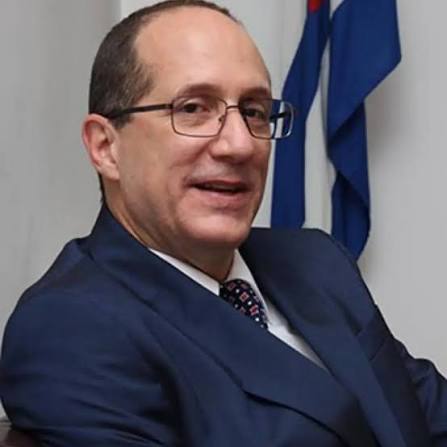
Foto: Instagram
The Cuban Ambassador to the Holy See, Leyde Rodríguez, declared to the press that his country currently faces the challenge of heightened political hostility from the United States, against which the revolutionary struggle of its people stands firm.
In an interview granted to the Italian digital newspaper Il SudEst, the diplomat noted that July 26 marks the 73rd anniversary of the assaults on the Moncada and Carlos Manuel de Céspedes barracks by young people led by the historic leader of the Cuban Revolution, Fidel Castro.
These were events of great historical significance that marked "the continuation of the Cuban epic for freedom, from the 19th-century independence struggles," against the puppet governments of the "pseudo-republic," initiating a new phase of struggle that led to the defeat of Fulgencio Batista's tyrannical forces, he stated.
The head of the island's diplomatic mission to the Vatican asserted that, following the revolutionary triumph of 1959, "Cuba has faced numerous battles to achieve and preserve its independence and sovereignty," in the face of pressure from U.S. administrations attempting to destroy the revolutionary process.
This is, as he described, a "multidimensional economic aggression that extends to other countries and through which a strict, cruel, and genocidal energy, economic, commercial, and financial blockade with extraterritorial effects is applied," imposed for over 60 years.
Rodríguez denounced that the United States uses the pretext and lie that a small island nation constitutes an "extraordinary" threat to its national security, with the objective of "maintaining the blockade and threatening Cuba with military aggression, which would lead to a bloodbath for both Cubans and Americans."
"The United States continues an illegal policy contrary to international law, while a group of global actors remains silent and indifferent to the collective punishment inflicted on an entire people," he lamented.
Therefore, it is crucial to condemn this criminal policy—a violation of human rights and international norms—in all possible forums, "such as the United Nations General Assembly, where with great dignity our Foreign Minister Bruno Rodríguez denounced the policy of economic suffocation against the Cuban people," he added.
The diplomat emphasized that, despite these pressures and threats, "Cuba's internationalism remains a fundamental pillar of its foreign policy and revolutionary spirit, sharing its resources and scientific and educational knowledge with nations of the Global South."
Regarding the 176 recent measures announced by the Cuban government, he signified that their goal "is to refine Cuban socialism and protect vulnerable people, seeking to generate economic wealth for equitable distribution."
"The essential content of the transformation is the vindication of socialism," the Cuban Ambassador to the Holy See reaffirmed.
Add new comment