
Counter-Critique: How a Politician is Constructed in a Netflix Series
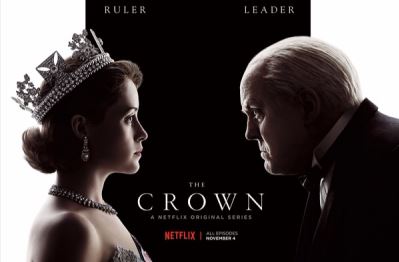
The construction of the politician within the culture of television series is a fascinating subject. In a previous installment of this column, I dedicated a section to The Crown, an Anglo-American production by Netflix. The material recounts the events of the reign of Elizabeth II of Windsor, one of the longest in British history, which left its mark on the 20th century and its successive transitions. However, there is something beyond that interests me about this series: how leadership is discussed, and how its signifier is constructed.
The series begins during Winston Churchill’s second term as Prime Minister—that dark period in history when the war had ended, yet the era demanded adaptations of the old power structure that the old Victorian elite was unwilling to accept without protest. It is precisely Churchill’s figure that offers the nuances and substance to establish a set of narratives emanating from the series' thesis, all contributing to an image of power.
Winston Churchill is a name that generates passions on both sides. The British patriot, the old lion who led his country through its darkest hour, is accompanied by the quintessential imperialist, the conservative who fought to prolong the existence of the Empire beyond its limits. The series portrays him as an obstinate, lucid, energetic, intellectual, and strong being. His indestructible character is linked to the warrior ethos. Churchill attended audiences with King George VI and later with Queen Elizabeth II remaining on his feet because he believed that all matters could be debated in twenty minutes. It was Anglo-Saxon pragmatism at its peak—the English view that time is money and money is power. There was no time for social gatherings. Churchill was a man of action who invested part of his life in warfare; in fact, he himself participated in several colonial conflicts and in the trenches of the First World War. Churchill became, in a way, the figure symbolizing that era of splendor and death for a political idea: that of English liberalism erected as a paradigm of civilization. He represented the old school of politics, the shadow of the Empire.
Now, how does the series handle this? There is a counterpoint between Churchill and the Queen that is exposed in terms of subtlety. Elizabeth appears as an inexperienced young woman who must gradually assume the weight of the crown as something initially impersonal, external, an adornment. Churchill assumes his function within that dynamic: that of political tradition, of centuries of imperial domination. Every communication between the two leaders is a sort of crisis from which the image of the Anglo-Saxon Empire emerges strengthened. It must not be overlooked that, unlike other nations, the transition from London to Washington occurred within the same civilization and was therefore experienced as a form of continuity. Churchill is a symbol of that process, bridging rather than dividing, guaranteeing the possibility for the Empire to endure, at least as a financial mechanism, a system of alliances, and balances. That is the legacy the series defends; that is the ideological background exposed to us.
The fall of the Empire is not portrayed with shocks or coups. What is narrated is rather a transmutation leading to a new civilized concept of the United Kingdom. Although India is mentioned, and chapters are dedicated to the Suez Crisis, the great figures almost always appear as individuals interested in maintaining a role within a status quo that surpasses them and fits into the archetype. The counterpoint between Churchill and his protégé Anthony Eden, while a power struggle, develops with low intensity because the imperial idea prevails. The confrontation with Attlee and the Labour opposition assumes a similar guise. There is a manifest intention to save the system by utilizing these figures through narratives. In this regard, the series is spectacular as a mechanism of propaganda. It does not impose its idea, nor does it sell it as the best; it narrates it, humanizes it, brings it closer. Consequently, viewers end up swallowing the story, adopting it uncritically. This is why it is vital to analyze the construction of the politician in cinema and series and contrast it with reality.
The Crown is no simple production. Approaching the reign of Elizabeth implies providing it with a narrative that helps sustain the one we already possess through hegemonic media, which upholds what remains of the old Empire. There are no coincidences there; we are speaking of a machinery of cultural power that does not yield to alternative narratives that could have also been in the spotlight. Churchill, even more than Elizabeth in the early seasons, is used as the image of the perfect leader, the archetype, and even the measure of sufficiency against other politicians of his time. The trap lies precisely in this idyllic construction of the Empire, which is presented to us as a unitary political entity in which the submission of peoples and kingdoms behaves naturally, without an analyzing morality.
Churchill is indeed a figure, a political intellectual. His books on the Second World War and English civilization must be read, clearly under the magnifying glass of his ideology. We are not talking about someone undeserving of the Nobel Prize in Literature. However, this does not erase the fact that he was also a key piece in sustaining the ideology of the white man and his colonizing crusade. There is a line connecting him to individuals like Rudyard Kipling. We are not speaking of a Briton in the manner of an Oscar Wilde, but rather that of a Cecil Rhodes. Somehow, the series omits these nuances, fails to mention them, and instead sells us the entire construction. Those who lack historical knowledge end up buying the idea that, for example, Nasser was an enemy of the West who blackmailed British politicians and created pretexts to establish a war that would destabilize the world. The inversion of the process of decolonization and nationalization of wealth is one of the harshest aspects of the series and one that deserves analysis. It is a re-elaboration that must be exposed due to the danger of its omissions.
Therefore, how does the series construct the figure of the politician? Through narratives, established power, and messaging lines. It is important to understand this while enjoying an excellent production. In this manner, consumption shifts from uncritical acceptance to active viewing and necessary deconstruction.
Translated by Sergio A. Paneque Díaz / CubaSí Translation Staff
Add new comment