
Almodóvar vs. The Oscars: When Golden Silence Hurts
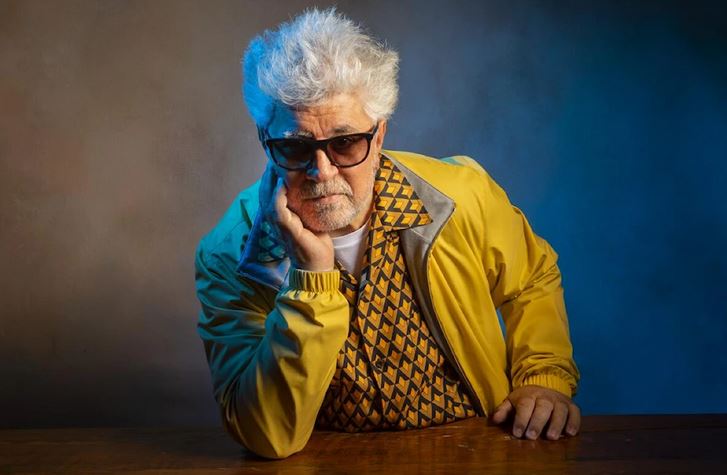
The hotel suite in Cannes offered a view of the sea, yet Pedro Almodóvar’s gaze was fixed elsewhere. He looked toward a television screen where, two months prior, the 2026 Oscars had passed without a single mention of "Palestine," without a mention of "Trump," and without a single word that strayed from the rigorous script. Or at least, very few did—only Bardem.
"It was quite striking," he remarked to a journalist from the Los Angeles Times, the word "striking" sounding in his mouth like an insult disguised as an observation.
Striking that amidst a genocide that has already claimed more than 50,000 lives in Gaza, amidst a U.S. president overseeing mass deportations and cutting humanitarian aid, and amidst an embattled Iran, Hollywood dedicated itself to distributing golden statuettes as if the world outside did not exist.
Striking that only Javier Bardem, his friend and companion in discomfort, dared to shout "Free Palestine" from the stage.
"It is evident that people are very afraid," Almodóvar stated. He then delivered the sentence that no one in that suite had asked for, but everyone needed to hear: "The United States is not a democracy at this moment."
The Man Who Cannot Agree
Almodóvar is not paid to say these things. In fact, it costs him dearly. After the Spanish government classified the Israeli offensive in Gaza as a "genocide" in March 2024—a definition Almodóvar publicly endorsed—the production company A24 ceased responding to his emails.
Netflix, which previously co-produced his short films, now looks the other way. His latest film, The Room Next Door, was ultimately financed with Spanish and French capital, with a distribution more modest than what a director with two Oscars and five Cannes awards deserves.
"I prefer a film seen by fewer people but made with freedom, than one seen by millions but made with fear," he said. The phrase does not sound like the discourse of a tortured artist.
It sounds like what it is: the logic of a 76-year-old man who grew up under the Franco dictatorship, who learned the cost of silence before learning how to direct, and who, at this stage, is not going to change just so a streaming executive can sleep soundly.
In November 2023, when Israel launched its offensive on Gaza, Almodóvar signed an open letter in Le Monde demanding a ceasefire. In February 2024, he refused to dine with the Israeli embassy at the Berlinale. At Cannes that same year, he stated during a press conference that "what is happening in Gaza is a genocide" and that he did not care if it cost him awards.
That night, at the Spanish delegation dinner, he refused to sit at the table of the Israeli ambassador to France. "It is not personal," he told those who attempted to mediate. "It is political. And in my country, political is synonymous with ethical."
Bardem: The Only One Who Did Not Look Away
The history between Almodóvar and Javier Bardem is not just one of friendship; it is one of political complicity in an industry that rewards amnesia. Bardem has paid an even higher price: in 2021, he narrated The Boy from Gaza, a documentary banned from U.S. festivals due to "political sensitivity."
In 2023, he founded "Artists for Palestine" alongside Susan Sarandon and Mark Ruffalo, pressuring production companies to break contracts with businesses linked to the Israeli military. During the Oscars in March, when he shouted "Free Palestine," Almodóvar was in Madrid, watching the television. He sent a WhatsApp message that simply read: "Thank you, friend. Someone had to do it."
Bardem and Almodóvar are an island on the Hollywood map. Two Spaniards who speak too loudly in an industry that has turned silence into a form of currency. "I am a foreigner; that makes it easier to be clear," Almodóvar says, but the excuse does not hold: he has been a "foreigner" in Hollywood for forty years and it never mattered to him before.
Chavela’s Song and the Endless Mourning
The film he is currently presenting at Cannes, Bitter Christmas (Amarga Navidad), carries a title borrowed from Chavela Vargas, the Mexican singer who was his close friend until her death. "Chavela sang that Christmas is bitter when you are not with the one you love," he said. "I add: Christmas is bitter when you see the world bleeding out and no one does anything."
The story follows Elsa, an advertising director mourning her mother, while a filmmaker writes a script about her life. There are no Palestinians in the script, no Trump, no protests. Yet Almodóvar insists: "The cinema of women, the cinema of bodies, the cinema of forbidden desires, is political because it is transgressive. In times of totalitarian regimes, to transgress is to resist."
This is his seventh attempt to win the Palme d'Or. The golden statuette, should it arrive, would be the coronation of a career. But Almodóvar has already won something more difficult: the ability to look at Hollywood, at Cannes, at any camera, and say what he thinks without his voice trembling.
In the hotel suite, the Los Angeles Times journalist packed away his recorder. Almodóvar remained staring at the sea—or perhaps toward Gaza, where he always looks when he thinks no one is watching. Outside, on the Croisette, the red carpet waited. Inside, a 76-year-old man who still refuses to be silent.
Add new comment